New Job Pending – Reasons, Timeline, and Solutions
New job direct deposit pending? Learn why your first paycheck is delayed, how long it usually takes, and simple steps to get paid faster.
DIRECT DEPOSIT
Alex Morgan
9/7/20262 min read
What Does “Direct Deposit Pending” Mean?
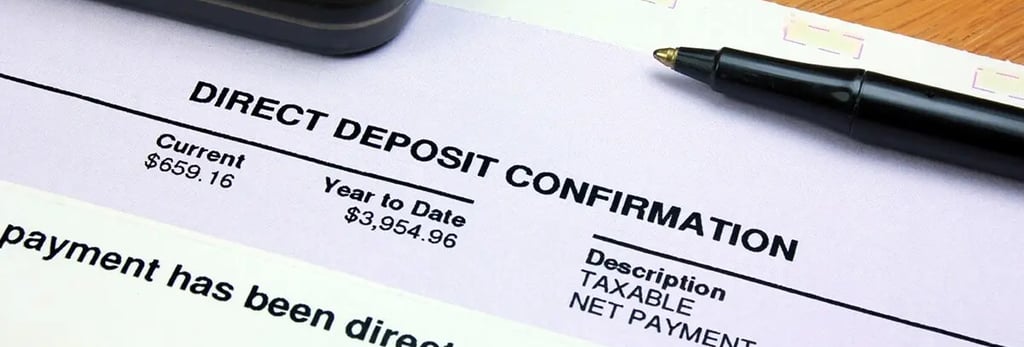
When your direct deposit is marked as pending, it means your employer or payroll provider has initiated the payment, but the funds have not yet been released into your bank account.
This status can appear:
In your payroll app
In your employee portal
On your bank’s transaction screen
Why Is My New Job Direct Deposit Pending?
1. First-Time Payroll Setup Delay
For new hires, payroll systems often need one full pay cycle to verify bank details. Your first paycheck may be processed as a paper check or delayed direct deposit.
2. Bank Account Verification
If your routing number or account number was entered incorrectly, the deposit may be held for verification or rejected temporarily.
3. Payroll Processing Cutoff
If you joined close to the payroll cutoff date, your payment may be scheduled for the next payroll run instead of the current one.
4. Bank Processing Time
Even after payroll releases the funds, banks can take 1 to 3 business days to post the deposit, especially for first-time payments.
5. Employer Payroll Approval Delay
Sometimes payroll is processed on time, but final approval is delayed internally by HR or finance teams.
How Long Does a New Job Direct Deposit Stay Pending?
In most cases:
1 to 3 business days after payroll is processed
Up to 5 business days for first-time direct deposits
One full pay cycle if your employer issues your first paycheck manually
If it goes beyond this period, action is needed.
What Should You Do If Your Direct Deposit Is Pending?
Step 1: Confirm Payroll Date
Check your offer letter or HR portal for the official pay date.
Step 2: Verify Bank Details
Make sure your routing number and account number are correct in the payroll system.
Step 3: Contact HR or Payroll
Ask whether your payment was released and if your first paycheck is being processed differently.
Step 4: Check With Your Bank
Some banks place temporary holds on first-time direct deposits.
Step 5: Ask About a Paper Check
Many employers issue a paper check for the first pay cycle while direct deposit is being set up.
Can a Pending Direct Deposit Be Rejected?
Yes, but it is rare. Rejections usually happen due to:
Incorrect bank details
Closed or inactive bank accounts
Name mismatch between payroll and bank records
If rejected, the employer usually reissues payment within a few business days.
Will I Still Get Paid If It Says Pending?
Yes. A pending status means the payment is in progress, not canceled. As long as payroll confirms the transaction, your paycheck will arrive.
Seeing “new job direct deposit pending” can be frustrating, especially when bills are due. In most cases, this delay is temporary and part of the normal onboarding process. First-time payments often take slightly longer, but once set up, future paychecks usually arrive on time.
If the pending status lasts longer than five business days, contacting HR or payroll is the fastest way to resolve the issue and ensure you get paid without further delays.